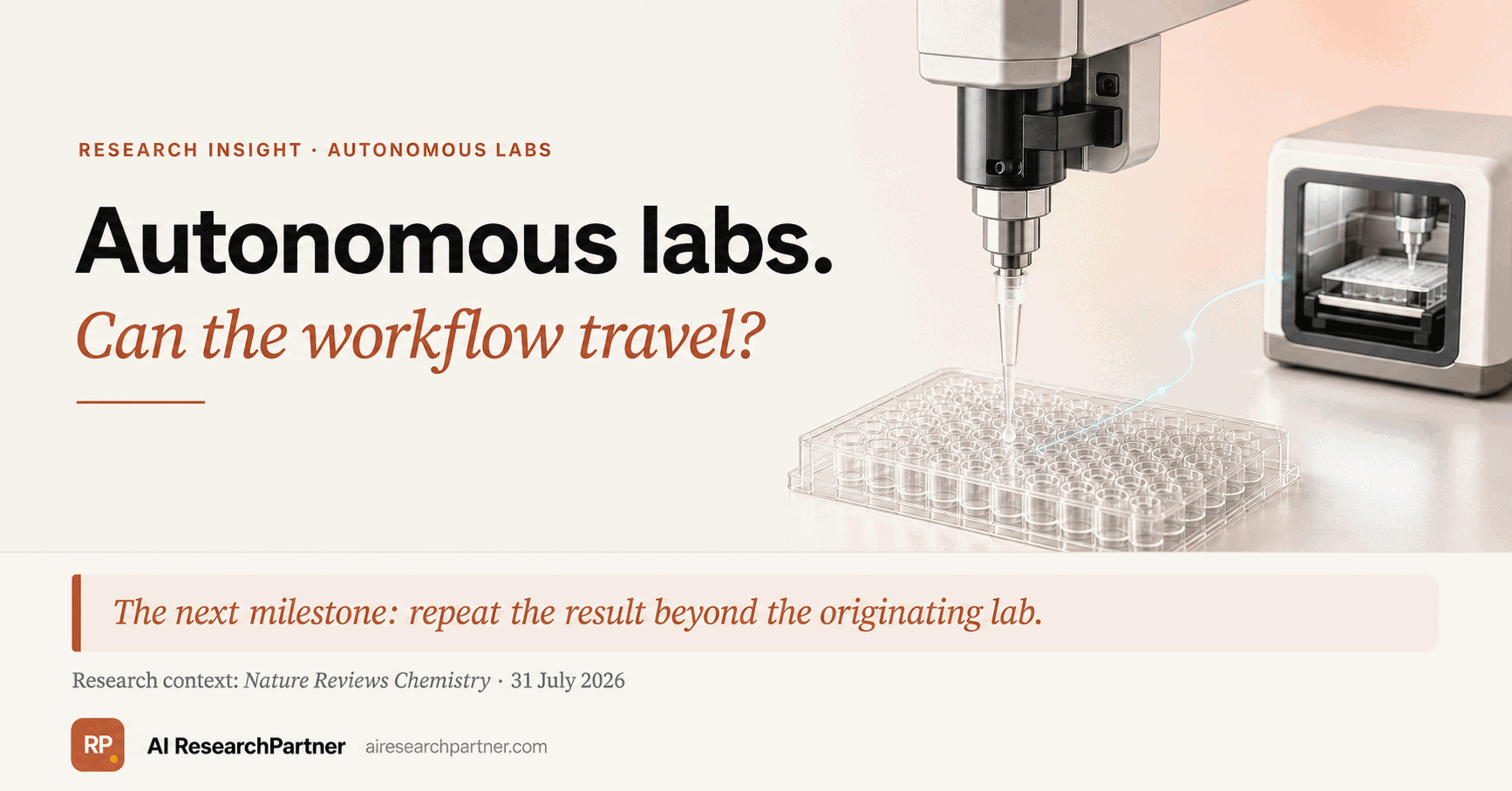
An autonomous lab can run an experiment. The next question is whether another lab can reproduce it.
A July 31 review in Nature Reviews Chemistry puts three priorities at the center of self-driving laboratories: scaling experiments, transferring workflows, and preserving a complete experimental record.
Our commercial read: the tools that make a workflow transferable deserve a place on the scouting shortlist. Instrument integration. Protocol validation. Data that explains how a result was produced.
Three next moves
- TTOs — map the transferable assets. What sits in software, hardware, data, and know-how? What still depends on the originating lab?
- R&D teams — make replication in a second lab a pilot milestone. Measure setup effort, human intervention, and the receiving team's ability to diagnose failures.
- VCs — ask what a second customer can deploy without the founding scientists on site. That is a useful test of a repeatable business.
This review sets an agenda. Cross-lab validation still needs to be demonstrated for each opportunity.
AI ResearchPartner connects research, IP context, and potential partners to help teams decide what to investigate next.
Which part of the workflow would you validate first?